The Midnight Library by Matt Haig
⭐️⭐️⭐️⭐️/5
My first introduction to The Midnight Library was in a review, on my friend Rachel’s blog. It was one of the last books she reviewed before she died. When I decided to create this blog to pick up where she left off, I thought that overlapping my first review with one of her lasts was only fitting. Her review did not give many spoilers, but I could tell from what it did say, this book was likely going to be a difficult read. Though it was difficult, it was also one of the best books I have read, at a time I needed it the most.
So, let’s get into it. The Midnight Library is a work of fiction, with touches of magical realism, but you will find no fantasy world to get lost in. Haig examines the human experience through the lenses of philosophy and quantum physics, in their simplest forms (think existentialism and parallel universes).
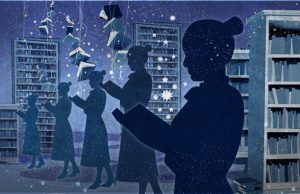
The book opens with Nora having an absolute shit day. She is fired from her comfortable job, drops the ball on a music class client, has no family or friends to lean on, and now her only companion, her cat, is dead. Nora decides at this point that her life is overwhelmingly negative and believes the world would be better off without her; and so, she makes the decision to overdose on antidepressants and bid farewell to the life and world she sees no future in. Instead of dying, Nora finds herself inside a magical library, with a familiar librarian there to, very vaguely, guide her on a journey of self-reflection and discovery. This is not your typical story of being stuck in purgatory, where you atone for sins to determine your ultimate fate, which I appreciated as a non-religious person. Each of the books in the endless library are different versions of Nora’s life, determined by even the smallest of decisions. Have you ever wondered what would have happened if you decided differently in life? Nora no longer needs to wonder, she gets to see how different decisions would have changed the trajectory of her life. This is where existentialism and quantum physics come into play. As Nora chooses a book, she is transported to a parallel universe and into another existence of her own making. In these different versions of her life, Nora must examine her choices, where they led, and determine if this is the existence where she would like to stay. Each existence did have its positives, and circumstances that Nora thought she may long for, but in the end, Nora was transported back to the library each time to choose a new book, a new life. In the end, Nora’s choices were to stay in an existence of her choosing, return to the life she attempted to end, or run out of time and she and her library of lives cease to exist entirely. I think it is important that you discover the ending for yourself, dear reader (I had to lol)
This book moved me in ways that few books have. I have felt like Nora. I have felt overwhelmingly alone, regretted decisions, questioned my self-worth, and wondered if the world would miss me if I was gone. I have read other books that made me examine these thoughts, but they have all been written through a lens of spirituality, which is something I am lacking in. So, enter existentialism and quantum physics. These are very heavy topics to discuss, but Haig makes them easy to understand and examine for the average reader. As a self-described humanist and existentialist, the concepts are easy for me to understand and discuss in academic circles, but The Midnight Library makes these topics easy to digest and discuss in everyday life.
Something I noticed about Nora, is that every decision she was questioning, or version of life she felt she was missing out on, were all dependent on what the men in her life wanted. Her brother and bandmate, her long-time partner, her dad; Nora felt that she let them all down and that is why her life was in a shambles and held no meaning. What about what Nora wanted? This experience in the library is exactly what Nora needed. It gave her ownership of her choices, and showed her what would truly make her happy, not how she could make others happy. Nora needed to live for herself first, an important lesson we all need to be reminded of from time to time. One of my favorite existentialists, Simone de Beauvoir, made two great points in her writing, which I think aptly apply to this story:
“Self-knowledge is no guarantee of happiness, but it is on the side of happiness and can supply the courage to fight for it.”
. . . . . . . . . .
“On the day when it will be possible for woman to love not in her weakness but in strength, not to escape herself but to find herself, not to abase herself but to assert herself – on that day love will become for her, as for man, a source of life and not of mortal danger.”
Nora greatly benefited from being forced to reflect on her choices, or lack thereof, and how they impacted her identity and sense of self. Through this experience, Nora discovered that true happiness is not lack of challenges, devoid of painful experiences, and it is certainly not a destination. It is something that you have to get up every single day and fight for, and it is worth it when you are fighting for yourself. She also had to face the fact that she had been living and making choices, based upon the men in her life, and once she was rid of them all, Nora had no idea how to live for herself.
Nora found the answers to her questions in these books about her life. Though these were all different versions of herself, they were often strangers to her, which further solidifies the fact that our decisions and choices truly do shape who we become; infinite possibilities that determine who we are and what we stand for.
What tied the whole thing together for me was the idea of the library. Why did Haig choose a library of books to take Nora on this journey of self-discovery? In my own opinion, it is the magic of books and reading that can help us navigate and understand this vast existence we call life. When I feel low and alone, I turn to books. We don’t need to be transported to our own version of the midnight library to self-reflect and feel less alone. Perhaps we won’t find the meaning of life in books, but we can find our own meaning, our deepest desires, and the knowledge that we are never truly alone.
To end this review, I will leave you with the wise words of Carl Sagan, who has helped me believe that true magic does exist:
“What an astonishing thing a book is. It’s a flat object made from a tree with flexible parts on which are imprinted lots of funny dark squiggles. But one glance at it and you’re inside the mind of another person, maybe somebody dead for thousands of years. Across the millennia, an author is speaking clearly and silently inside your head, directly to you. Writing is perhaps the greatest of human inventions, binding together people who never knew each other, citizens of distant epochs. Books break the shackles of time. A book is proof that humans are capable of working magic.”
Cosmos, Part 11: The Persistence of Memory (1980)

 Emo Academia